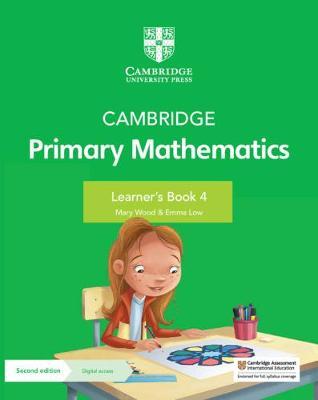
By (author) Mary Wood , By (author) Emma Low , By (author) Greg Byrd , By (author) Lynn Byrd
Discover our new resources for the Cambridge International Primary and Lower Secondary Curriculum Frameworks. Whether they are presenting data in a range of formats or exploring cube numbers, Cambridge Primary Mathematics helps your learners develop their mathematical thinking skills. They’ll be fully supported with worked examples and plenty of practice exercises, while projects throughout the book provide opportunities for deeper investigation of mathematical concepts – including predicting patterns using matchsticks. With key word boxes, clear diagrams and supporting illustrations, the course makes maths accessible for second language learners.
By (author) Sally Burt , By (author) Debbie Ridgard
Discover our new resources for the Cambridge International Primary and Lower Secondary Curriculum Frameworks Your learners will develop their English skills as they explore science fiction stories, analyse news headlines and write a play script. You’ll find a range of international fiction, non-fiction, poetry and drama to help learners develop their understanding of different genres and text types. Each unit is packed with activities that cover reading, writing, speaking and listening, as well as opportunities to develop 21st century skills such as collaboration and critical thinking. Units end with a project, like performing a group reading of a poem, to help learners communicate confidently and understand how to apply their learning to real-world scenarios.
Discover our new resources for the Cambridge International Primary and Lower Secondary Curriculum Frameworks From finding out how the respiratory system works, to identifying reactants and products in chemical reactions, Cambridge Primary Science gets your learners thinking like scientists! Packed with opportunities to plan experiments, make predictions and gather results, the series helps your learners think and work scientifically. Each unit ends with a project, like designing a product using recycled waste plastic, that helps learners bring together what they have learnt and understand how the topics relate to the real world. With vocabulary boxes, clear diagrams and supporting illustrations, the course makes science accessible for learners with English as a second language.
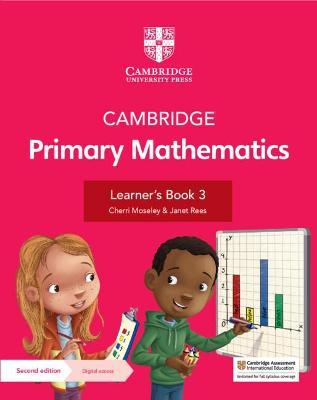
By (author) Cherri Moseley , By (author) Janet Rees
Discover our new resources for the Cambridge International Primary and Lower Secondary Curriculum Frameworks. Whether they are learning about numbers with dominoes or using 3D shapes to create a house, Cambridge Primary Mathematics helps your learners develop their mathematical thinking skills. They’ll be fully supported with worked examples and plenty of practice exercises, while projects throughout the book provide opportunities for deeper investigation of mathematical concepts – including making their own snakes to develop comparison skills. With key word boxes, clear diagrams and supporting illustrations, the course makes maths accessible for second language learners.
By (author) Cherri Moseley , By (author) Janet Rees
Discover our new resources for the Cambridge International Primary and Lower Secondary Curriculum Frameworks. Whether they are working with a partner to make 3D shapes using cubes or sorting data using a Carroll diagram, Cambridge Primary Mathematics helps your learners develop their mathematical thinking skills. They’ll be fully supported with worked examples and plenty of practice exercises, while projects throughout the book provide opportunities for deeper investigation of mathematical concepts – including developing comparison skills and working out proportions using drinks. With key word boxes, clear diagrams and supporting illustrations, the course makes maths accessible for second language learners.
By (author) Gill Budgell , By (author) Kate Ruttle
Discover our new resources for the Cambridge International Primary and Lower Secondary Curriculum Frameworks Your learners will develop their English skills as they get tangled up with tongue twisters and discover traditional tales. You’ll find a wide range of international fiction, non-fiction and poetry throughout the book to help your learners develop their understanding of different genres and text types. Each unit is packed with activities that cover reading, writing, speaking and listening, as well as opportunities to develop 21st century skills – such as collaboration and critical thinking. Units end with a project, like designing a board game, to help learners communicate confidently and understand how to apply their learning to real-world scenarios.
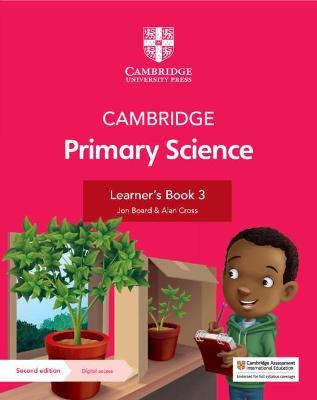
Discover our new resources for the Cambridge International Primary and Lower Secondary Curriculum Frameworks From discovering what sugar does to our teeth, to investigating which fabric is best for an umbrella, Cambridge Primary Science gets your learners thinking like scientists! Packed with opportunities to plan experiments, make predictions and gather results, the series helps your learners to think and work scientifically. Each unit ends with a project, like inventing a new electrical appliance, that helps students bring together what they have learnt, and understand how the topics relate to the real world. With vocabulary boxes, clear diagrams and supporting illustrations, the course makes science accessible for learners with English as a second language.
By (author) Cherri Moseley , By (author) Janet Rees
Discover our new resources for the Cambridge International Primary and Lower Secondary Curriculum Frameworks. Whether they are adding and subtracting three-digit numbers or ordering and comparing fractions, Cambridge Primary Mathematics helps your learners develop their mathematical thinking skills.They’ll be fully supported with worked examples and plenty of practice exercises, while projects throughout the book provide opportunities for deeper investigation of mathematical concepts – including investigating modelling of prisms and pyramids. With key word boxes, clear diagrams and supporting illustrations, the course makes maths accessible for second language learners.
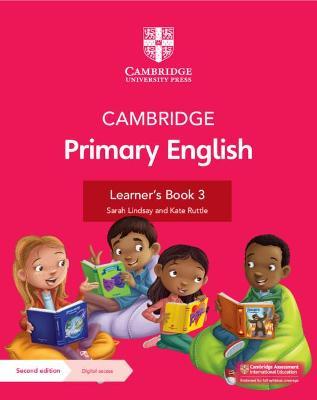
By (author) Sarah Lindsay , By (author) Kate Ruttle
Discover our new resources for the Cambridge International Primary and Lower Secondary Curriculum Frameworks Your learners will develop their English skills as they explore different settings for stories and discuss the difference between myths and legends. You’ll find a range of international fiction, non-fiction, poetry and drama throughout the book to help learners develop their understanding of different genres and text types. Each unit is packed with activities that cover reading, writing, speaking and listening, as well as opportunities to develop 21st century skills – such as collaboration and critical thinking. Units end with a project, like planning props for a play, to help students communicate confidently and apply their learning to real-world scenarios.
Discover our new resources for the Cambridge International Primary and Lower Secondary Curriculum Frameworks From learning about why the Moon appears to change shape, to investigating how shadows are formed, Cambridge Primary Science gets your learners thinking like scientists! Packed with opportunities to plan experiments, make predictions and gather results, the series helps your learners to think and work scientifically. Each unit ends with a project, like designing a reusable or disposable object, that helps students bring together what they have learnt, and understand how the topics relate to the real world. With vocabulary boxes, clear diagrams and supporting illustrations, the course makes science accessible for learners with English as a second language.
Discover our new resources for the Cambridge International Primary and Lower Secondary Curriculum Frameworks. Whether they are learning about multiplying with chocolate or using recipes to understand fractions, Cambridge Primary Mathematics helps your learners develop their mathematical thinking skills. Learners will be fully supported with worked examples and plenty of practice exercises, while projects throughout the book provide opportunities for deeper investigation of mathematical ideas and concepts, such as exploring negative numbers through water levels. With key word boxes, clear diagrams and supporting illustrations, the course makes maths accessible for second language learners.
By (author) Sally Burt , By (author) Debbie Ridgard
Discover our new resources for the Cambridge International Primary and Lower Secondary Curriculum Frameworks Your learners will develop their English skills as they explore non-fiction texts, discover nonsense poetry and write their own fables. You’ll find a wide range of international fiction, non-fiction, poetry and drama to help your learners develop their understanding of different genres and text types. Each unit includes activities that cover reading, writing, speaking and listening, as well as opportunities to develop 21st century skills – such as collaboration and critical thinking. Units end with a project, like creating an exhibition about World Environment Day, to help students communicate confidently and understand how to apply their learning to real-world scenarios.