WordPress database error: [Table './smDJtGH6wTJK5t/wp1f_actionscheduler_actions' is marked as crashed and last (automatic?) repair failed] SELECT a.hook FROM wp1f_actionscheduler_actions a
JOIN wp1f_actionscheduler_groups g ON g.group_id = a.group_id
WHERE g.slug = 'wp_mail_smtp' AND a.status IN ('in-progress', 'pending')
WordPress database error: [Table './smDJtGH6wTJK5t/wp1f_actionscheduler_actions' is marked as crashed and last (automatic?) repair failed] SELECT a.action_id FROM wp1f_actionscheduler_actions a WHERE 1=1 AND a.hook='wp_mail_smtp_summary_report_email' AND a.status IN ('in-progress', 'pending') LIMIT 0, 1
WordPress database error: [Table './smDJtGH6wTJK5t/wp1f_actionscheduler_actions' is marked as crashed and last (automatic?) repair failed]
INSERT INTO wp1f_actionscheduler_actions ( `hook`, `status`, `scheduled_date_gmt`, `scheduled_date_local`, `schedule`, `group_id`, `priority`, `args` )
SELECT 'wp_mail_smtp_summary_report_email', 'pending', '2026-06-15 11:00:00', '2026-06-15 14:00:00', 'O:32:\"ActionScheduler_IntervalSchedule\":5:{s:22:\"\0*\0scheduled_timestamp\";i:1781521200;s:18:\"\0*\0first_timestamp\";i:1781521200;s:13:\"\0*\0recurrence\";i:604800;s:49:\"\0ActionScheduler_IntervalSchedule\0start_timestamp\";i:1781521200;s:53:\"\0ActionScheduler_IntervalSchedule\0interval_in_seconds\";i:604800;}', 13, 10, '[null]' FROM DUAL
WHERE (
SELECT action_id FROM wp1f_actionscheduler_actions
WHERE status IN ( 'pending', 'in-progress' )
AND hook = 'wp_mail_smtp_summary_report_email'
AND `group_id` = 13
 LIMIT 1 ) IS NULL
WordPress database error: [Table './smDJtGH6wTJK5t/wp1f_actionscheduler_actions' is marked as crashed and last (automatic?) repair failed] SELECT a.action_id FROM wp1f_actionscheduler_actions a WHERE 1=1 AND a.hook='wp_mail_smtp_admin_notifications_update' AND a.status IN ('in-progress', 'pending') LIMIT 0, 1
WordPress database error: [Table './smDJtGH6wTJK5t/wp1f_actionscheduler_actions' is marked as crashed and last (automatic?) repair failed]
INSERT INTO wp1f_actionscheduler_actions ( `hook`, `status`, `scheduled_date_gmt`, `scheduled_date_local`, `schedule`, `group_id`, `priority`, `args` )
SELECT 'wp_mail_smtp_admin_notifications_update', 'pending', '2026-06-13 16:32:10', '2026-06-13 19:32:10', 'O:32:\"ActionScheduler_IntervalSchedule\":5:{s:22:\"\0*\0scheduled_timestamp\";i:1781368330;s:18:\"\0*\0first_timestamp\";i:1781368330;s:13:\"\0*\0recurrence\";i:86400;s:49:\"\0ActionScheduler_IntervalSchedule\0start_timestamp\";i:1781368330;s:53:\"\0ActionScheduler_IntervalSchedule\0interval_in_seconds\";i:86400;}', 13, 10, '[null]' FROM DUAL
WHERE (
SELECT action_id FROM wp1f_actionscheduler_actions
WHERE status IN ( 'pending', 'in-progress' )
AND hook = 'wp_mail_smtp_admin_notifications_update'
AND `group_id` = 13
 LIMIT 1 ) IS NULL
WordPress database error: [Table './smDJtGH6wTJK5t/wp1f_actionscheduler_actions' is marked as crashed and last (automatic?) repair failed] SELECT a.action_id FROM wp1f_actionscheduler_actions a LEFT JOIN wp1f_actionscheduler_groups g ON g.group_id=a.group_id WHERE 1=1 AND g.slug='aioseo' AND a.hook='aioseo_cache_prune' AND a.args='[]' AND a.status IN ('in-progress', 'pending') LIMIT 0, 1
WordPress database error: [Table './smDJtGH6wTJK5t/wp1f_actionscheduler_actions' is marked as crashed and last (automatic?) repair failed] SELECT a.action_id FROM wp1f_actionscheduler_actions a LEFT JOIN wp1f_actionscheduler_groups g ON g.group_id=a.group_id WHERE 1=1 AND g.slug='aioseo' AND a.hook='aioseo_cache_prune' AND a.args='[]' AND a.status IN ('in-progress', 'pending') LIMIT 0, 1
WordPress database error: [Table './smDJtGH6wTJK5t/wp1f_actionscheduler_actions' is marked as crashed and last (automatic?) repair failed]
INSERT INTO wp1f_actionscheduler_actions ( `hook`, `status`, `scheduled_date_gmt`, `scheduled_date_local`, `schedule`, `group_id`, `priority`, `args` )
SELECT 'aioseo_cache_prune', 'pending', '2026-06-13 16:31:11', '2026-06-13 19:31:11', 'O:32:\"ActionScheduler_IntervalSchedule\":5:{s:22:\"\0*\0scheduled_timestamp\";i:1781368271;s:18:\"\0*\0first_timestamp\";i:1781368271;s:13:\"\0*\0recurrence\";i:86400;s:49:\"\0ActionScheduler_IntervalSchedule\0start_timestamp\";i:1781368271;s:53:\"\0ActionScheduler_IntervalSchedule\0interval_in_seconds\";i:86400;}', 9, 10, '[]' FROM DUAL
WHERE ( SELECT NULL FROM DUAL ) IS NULL
WordPress database error: [Table './smDJtGH6wTJK5t/wp1f_actionscheduler_actions' is marked as crashed and last (automatic?) repair failed] SELECT a.action_id FROM wp1f_actionscheduler_actions a LEFT JOIN wp1f_actionscheduler_groups g ON g.group_id=a.group_id WHERE 1=1 AND g.slug='aioseo' AND a.hook='aioseo_cache_prune' AND a.args='[]' AND a.status IN ('in-progress', 'pending') LIMIT 0, 1
WordPress database error: [Table './smDJtGH6wTJK5t/wp1f_actionscheduler_actions' is marked as crashed and last (automatic?) repair failed] SELECT a.action_id FROM wp1f_actionscheduler_actions a LEFT JOIN wp1f_actionscheduler_groups g ON g.group_id=a.group_id WHERE 1=1 AND g.slug='aioseo' AND a.hook='aioseo_cache_prune' AND a.args='[]' AND a.status IN ('in-progress', 'pending') LIMIT 0, 1
WordPress database error: [Table './smDJtGH6wTJK5t/wp1f_actionscheduler_actions' is marked as crashed and last (automatic?) repair failed]
INSERT INTO wp1f_actionscheduler_actions ( `hook`, `status`, `scheduled_date_gmt`, `scheduled_date_local`, `schedule`, `group_id`, `priority`, `args` )
SELECT 'aioseo_cache_prune', 'pending', '2026-06-13 16:31:11', '2026-06-13 19:31:11', 'O:32:\"ActionScheduler_IntervalSchedule\":5:{s:22:\"\0*\0scheduled_timestamp\";i:1781368271;s:18:\"\0*\0first_timestamp\";i:1781368271;s:13:\"\0*\0recurrence\";i:86400;s:49:\"\0ActionScheduler_IntervalSchedule\0start_timestamp\";i:1781368271;s:53:\"\0ActionScheduler_IntervalSchedule\0interval_in_seconds\";i:86400;}', 9, 10, '[]' FROM DUAL
WHERE ( SELECT NULL FROM DUAL ) IS NULL
WordPress database error: [Table './smDJtGH6wTJK5t/wp1f_actionscheduler_actions' is marked as crashed and last (automatic?) repair failed] SELECT a.action_id FROM wp1f_actionscheduler_actions a WHERE 1=1 AND a.hook='woocommerce_ac_send_email_action' AND a.status IN ('in-progress') ORDER BY a.scheduled_date_gmt ASC LIMIT 0, 1
WordPress database error: [Table './smDJtGH6wTJK5t/wp1f_actionscheduler_actions' is marked as crashed and last (automatic?) repair failed] SELECT a.action_id FROM wp1f_actionscheduler_actions a WHERE 1=1 AND a.hook='woocommerce_ac_send_email_action' AND a.status IN ('pending') ORDER BY a.scheduled_date_gmt ASC LIMIT 0, 1
WordPress database error: [Table './smDJtGH6wTJK5t/wp1f_actionscheduler_actions' is marked as crashed and last (automatic?) repair failed]
INSERT INTO wp1f_actionscheduler_actions ( `hook`, `status`, `scheduled_date_gmt`, `scheduled_date_local`, `schedule`, `group_id`, `priority`, `args` )
SELECT 'woocommerce_ac_send_email_action', 'pending', '2026-06-13 16:32:11', '2026-06-13 19:32:11', 'O:32:\"ActionScheduler_IntervalSchedule\":5:{s:22:\"\0*\0scheduled_timestamp\";i:1781368331;s:18:\"\0*\0first_timestamp\";i:1781368331;s:13:\"\0*\0recurrence\";i:900;s:49:\"\0ActionScheduler_IntervalSchedule\0start_timestamp\";i:1781368331;s:53:\"\0ActionScheduler_IntervalSchedule\0interval_in_seconds\";i:900;}', 10, 10, '[]' FROM DUAL
WHERE ( SELECT NULL FROM DUAL ) IS NULL
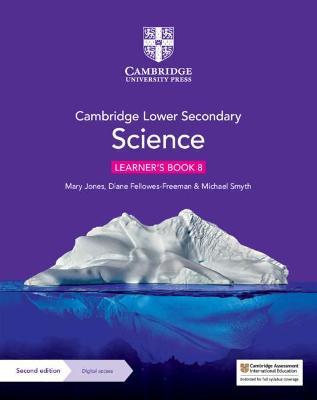
By (author) Mary Jones , By (author) Diane Fellowes-Freeman , By (author) Michael Smyth
Discover our new resources for the Cambridge International Primary and Lower Secondary Curriculum Frameworks From investigating climate change, to using a catalyst to speed up a chemical reaction, Cambridge Lower Secondary Science gets you thinking like a scientist! Packed with opportunities to plan experiments, make predictions and gather results, the series helps you think and work scientifically. Each unit ends with a project, like using sand to investigate impact craters, to help you bring together what you have learnt and show how the topics relate to the real world. With vocabulary boxes, clear diagrams and supporting illustrations, the course makes science accessible for learners with English as a second language.
By (author) Mary Jones , By (author) Diane Fellowes-Freeman , By (author) Michael Smyth
Discover our new resources for the Cambridge International Primary and Lower Secondary Curriculum Frameworks From discovering how we breathe, to finding out how gravity works, Cambridge Lower Secondary Science gets you thinking like a scientist! Packed with opportunities to plan experiments, make predictions and gather results, the series helps you think and work scientifically. Each unit ends with a project, like using chromatographs to solve a mystery, to help you bring together what you have learnt and show how the topics relate to the real world. With vocabulary boxes, clear diagrams and supporting illustrations, the course makes science accessible for learners with English as a second language.
By (author) Mary Jones , By (author) Diane Fellowes-Freeman , By (author) Michael Smyth
Discover our new resources for the Cambridge International Primary and Lower Secondary Curriculum Frameworks From discovering how air resistance helps planes land, to making your own circuits, Cambridge Lower Secondary Science gets you thinking like a scientist! Packed with opportunities to plan experiments, make predictions and gather results, the series helps you think and work scientifically. Each unit ends with a project, like making a model of a volcanic eruption, to help you bring together what you have learnt and show how the topics relate to the real world. With vocabulary boxes, clear diagrams and supporting illustrations, the course makes science accessible for learners with English as a second language.
Product details
Paperback | 344 pages
219 x 276 x 14mm | 870g
10 Jun 2021
Cambridge University Press
Cambridge, United Kingdom
English
Revised
2nd Revised edition
Worked examples or Exercises; Worked examples or Exercises
Supports students studying for Cambridge IGCSE (R) English as a Second Language (ESL). This fully updated print coursebook is designed to support students studying for Cambridge IGCSE (R) English as a Second Language syllabus (0510/0511/0991) for examination in 2019. With carefully scaffolded content, this easy to navigate coursebook has a language focus in each unit and offers new word and top tips. Each unit is themed and takes an integrated skills approach while emphasizing a core skill. At the end of each chapter students can reflect and develop on what they have learnt, all to help build students’ language skills and confidence in English as the course progresses. Answers in teacher’s book.
Fully updated, flexible resources taking an active-learning approach that encourages students to aim higher in the 0500, 0524 and 0990 syllabuses. Explore the mysterious River Congo in Joseph Conrad’s Heart of Darkness, meet Noppakhoa – the elephant who loves to paint, and learn fiery facts about rockets. Through interesting topics and exam-style questions, this write-in language skills and practice book provides students with the grammar practice they need for the course and beyond. The clear layout of the book makes focusing on particular grammatical concepts easy, allowing teachers to tailor lessons to their class. Suggested answers to questions are at the back of the book.
Fully updated, flexible resources taking an active-learning approach that encourages students to aim higher in the 0500, 0524 and 0990 syllabuses. With travel writing, magazine articles, blogs and extracts from writers such as Roald Dahl and D. H. Lawrence, this coursebook helps students develop their English Language skills through an active, communicative approach. The first unit in each part covers text analysis, summary writing and note-taking. The second deals with directed writing and the third looks at descriptive and narrative composition and includes suggestions for coursework topics if your school follows this pathway. Suggested answers to coursebook questions are included in the teacher’s book.
Skills focused, endorsed series for examination from 2023; inspired by teachers, for teachers. This print and digital coursebook has been developed from extensive research through lesson observations, interviews and work with our research community (the Cambridge Panel) to meet specific needs. Activities and questions develop students’ essential science skills. Accessible language and features support English as a second language learners. Exam-style questions build student confidence. Projects provide opportunities for assessment for learning, cross-curricular learning and developing skills for life. There are multiple opportunities to engage in active learning, such as role-play activities, discussions, and self-assessment and reflection activities. Answers for all questions and exercises can be found online at www.cambridge.org/go.
By (author) Richard Harwood , By (author) Ian Lodge , By (author) Chris Millington
Skills focused series, working towards endorsement, for examination from 2023; inspired by teachers, for teachers This print and digital coursebook has been developed from extensive research through lesson observations, interviews and work with our research community (the Cambridge Panel) to meet specific needs. Activities and questions develop students’ essential science skills. Accessible language and features support English as a second language learners. Exam-style questions build student confidence. Projects provide opportunities for assessment for learning, cross-curricular learning and developing skills for life. There are multiple opportunities to engage in active learning, such as discussions and debates, and self-assessment and reflection activities. Answers for all questions and exercises can be found online at www.cambridge.org/go.
By (author) David Sang , By (author) Mike Follows , By (author) Sheila Tarpey
Skills focused series, working towards endorsement, for examination from 2023; inspired by teachers, for teachers. This print and digital coursebook has been developed from extensive research through lesson observations, interviews and work with our research community (the Cambridge Panel) to meet specific needs. Activities and questions develop students’ essential science skills. Accessible language and features support English as a second language learners. Exam-style questions build student confidence. Projects provide opportunities for assessment for learning, cross-curricular learning and developing skills for life. There are multiple opportunities to engage in active learning, from scripting a podcast, to discussions and debates, and self-assessment and reflection activities. Answers are accessible to teachers for free on the Cambridge GO platform.
By (author) Mark Fisher , By (author) Medi Houghton , By (author) Veenu Jain
This revised set of resources for Cambridge IGCSE, IGCSE (9-1) and O Level Business Studies syllabuses (0450, 0986, 7115) is thoroughly updated for first examinations from 2020. This coursebook contains exam-style case studies and stimulus material from businesses around the world – ranging from a social enterprise in China to a fast food outlet in Zimbabwe. These give an international view of the real world applications of Business Studies theory. This book provides comprehensive exam support with questions to help students practice and build their confidence with the subject. The final chapter gives revision tips and advice on writing well-structured answers. The answers to the coursebook questions are in the teacher’s resource. For free revision support, go to the Cambridge University Press website.
Covers the Cambridge IGCSE Accounting syllabus (0452) and Cambridge O Level Accounting syllabus (7110), first examination 2020. With more practice questions than the previous edition and content matched to the Cambridge IGCSE and O Level Accounting syllabuses, this coursebook increases understanding of accounting best practice. Clear step-by-step explanations and instructions help students learn how to record, report, present and interpret financial information while gaining an appreciation of the ways accounting is used in modern business contexts. The coursebook is ideal for those new to accounting. Also available in the series – workbook, revision guide, teacher’s resource and Cambridge Elevate enhanced edition. Answers to the coursebook and workbook questions are in the teacher’s resource.
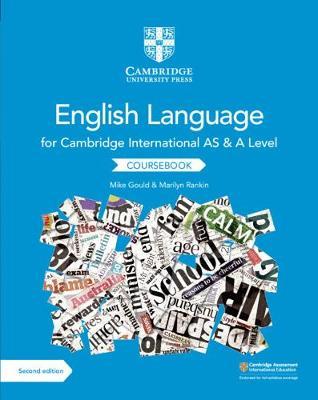
By (author) Mike Gould , By (author) Marilyn Rankin
Updated and fully aligned with the Cambridge International AS & A Level English Language 9093 syllabus for examination 2021. This coursebook helps students take an active approach to developing and applying the key reading and writing skills they need to succeed in their AS & A Level English Language course. In the first part of the book, for AS Level, students will learn to analyze and write different text types, from diaries and blogs to reviews, speeches and narratives. The second part supports A Level study, building on the skills students have learnt at AS level and applying them to four specialist areas of English: Language Change, Child Language Acquisition, English and the World, and Language and the Self.
WordPress database error: [Table './smDJtGH6wTJK5t/wp1f_actionscheduler_actions' is marked as crashed and last (automatic?) repair failed] SELECT a.action_id FROM wp1f_actionscheduler_actions a WHERE 1=1 AND a.hook='wc_schedule_pending_batch_processes' AND a.status IN ('in-progress', 'pending') LIMIT 0, 1