WordPress database error: [Table './smDJtGH6wTJK5t/wp1f_actionscheduler_actions' is marked as crashed and last (automatic?) repair failed] SELECT a.hook FROM wp1f_actionscheduler_actions a
JOIN wp1f_actionscheduler_groups g ON g.group_id = a.group_id
WHERE g.slug = 'wp_mail_smtp' AND a.status IN ('in-progress', 'pending')
WordPress database error: [Table './smDJtGH6wTJK5t/wp1f_actionscheduler_actions' is marked as crashed and last (automatic?) repair failed] SELECT a.action_id FROM wp1f_actionscheduler_actions a WHERE 1=1 AND a.hook='wp_mail_smtp_summary_report_email' AND a.status IN ('in-progress', 'pending') LIMIT 0, 1
WordPress database error: [Table './smDJtGH6wTJK5t/wp1f_actionscheduler_actions' is marked as crashed and last (automatic?) repair failed]
INSERT INTO wp1f_actionscheduler_actions ( `hook`, `status`, `scheduled_date_gmt`, `scheduled_date_local`, `schedule`, `group_id`, `priority`, `args` )
SELECT 'wp_mail_smtp_summary_report_email', 'pending', '2026-06-15 11:00:00', '2026-06-15 14:00:00', 'O:32:\"ActionScheduler_IntervalSchedule\":5:{s:22:\"\0*\0scheduled_timestamp\";i:1781521200;s:18:\"\0*\0first_timestamp\";i:1781521200;s:13:\"\0*\0recurrence\";i:604800;s:49:\"\0ActionScheduler_IntervalSchedule\0start_timestamp\";i:1781521200;s:53:\"\0ActionScheduler_IntervalSchedule\0interval_in_seconds\";i:604800;}', 13, 10, '[null]' FROM DUAL
WHERE (
SELECT action_id FROM wp1f_actionscheduler_actions
WHERE status IN ( 'pending', 'in-progress' )
AND hook = 'wp_mail_smtp_summary_report_email'
AND `group_id` = 13
 LIMIT 1 ) IS NULL
WordPress database error: [Table './smDJtGH6wTJK5t/wp1f_actionscheduler_actions' is marked as crashed and last (automatic?) repair failed] SELECT a.action_id FROM wp1f_actionscheduler_actions a WHERE 1=1 AND a.hook='wp_mail_smtp_admin_notifications_update' AND a.status IN ('in-progress', 'pending') LIMIT 0, 1
WordPress database error: [Table './smDJtGH6wTJK5t/wp1f_actionscheduler_actions' is marked as crashed and last (automatic?) repair failed]
INSERT INTO wp1f_actionscheduler_actions ( `hook`, `status`, `scheduled_date_gmt`, `scheduled_date_local`, `schedule`, `group_id`, `priority`, `args` )
SELECT 'wp_mail_smtp_admin_notifications_update', 'pending', '2026-06-12 13:49:44', '2026-06-12 16:49:44', 'O:32:\"ActionScheduler_IntervalSchedule\":5:{s:22:\"\0*\0scheduled_timestamp\";i:1781272184;s:18:\"\0*\0first_timestamp\";i:1781272184;s:13:\"\0*\0recurrence\";i:86400;s:49:\"\0ActionScheduler_IntervalSchedule\0start_timestamp\";i:1781272184;s:53:\"\0ActionScheduler_IntervalSchedule\0interval_in_seconds\";i:86400;}', 13, 10, '[null]' FROM DUAL
WHERE (
SELECT action_id FROM wp1f_actionscheduler_actions
WHERE status IN ( 'pending', 'in-progress' )
AND hook = 'wp_mail_smtp_admin_notifications_update'
AND `group_id` = 13
 LIMIT 1 ) IS NULL
WordPress database error: [Table './smDJtGH6wTJK5t/wp1f_actionscheduler_actions' is marked as crashed and last (automatic?) repair failed] SELECT a.action_id FROM wp1f_actionscheduler_actions a LEFT JOIN wp1f_actionscheduler_groups g ON g.group_id=a.group_id WHERE 1=1 AND g.slug='aioseo' AND a.hook='aioseo_cache_prune' AND a.args='[]' AND a.status IN ('in-progress', 'pending') LIMIT 0, 1
WordPress database error: [Table './smDJtGH6wTJK5t/wp1f_actionscheduler_actions' is marked as crashed and last (automatic?) repair failed] SELECT a.action_id FROM wp1f_actionscheduler_actions a LEFT JOIN wp1f_actionscheduler_groups g ON g.group_id=a.group_id WHERE 1=1 AND g.slug='aioseo' AND a.hook='aioseo_cache_prune' AND a.args='[]' AND a.status IN ('in-progress', 'pending') LIMIT 0, 1
WordPress database error: [Table './smDJtGH6wTJK5t/wp1f_actionscheduler_actions' is marked as crashed and last (automatic?) repair failed]
INSERT INTO wp1f_actionscheduler_actions ( `hook`, `status`, `scheduled_date_gmt`, `scheduled_date_local`, `schedule`, `group_id`, `priority`, `args` )
SELECT 'aioseo_cache_prune', 'pending', '2026-06-12 13:48:44', '2026-06-12 16:48:44', 'O:32:\"ActionScheduler_IntervalSchedule\":5:{s:22:\"\0*\0scheduled_timestamp\";i:1781272124;s:18:\"\0*\0first_timestamp\";i:1781272124;s:13:\"\0*\0recurrence\";i:86400;s:49:\"\0ActionScheduler_IntervalSchedule\0start_timestamp\";i:1781272124;s:53:\"\0ActionScheduler_IntervalSchedule\0interval_in_seconds\";i:86400;}', 9, 10, '[]' FROM DUAL
WHERE ( SELECT NULL FROM DUAL ) IS NULL
WordPress database error: [Table './smDJtGH6wTJK5t/wp1f_actionscheduler_actions' is marked as crashed and last (automatic?) repair failed] SELECT a.action_id FROM wp1f_actionscheduler_actions a LEFT JOIN wp1f_actionscheduler_groups g ON g.group_id=a.group_id WHERE 1=1 AND g.slug='aioseo' AND a.hook='aioseo_cache_prune' AND a.args='[]' AND a.status IN ('in-progress', 'pending') LIMIT 0, 1
WordPress database error: [Table './smDJtGH6wTJK5t/wp1f_actionscheduler_actions' is marked as crashed and last (automatic?) repair failed] SELECT a.action_id FROM wp1f_actionscheduler_actions a LEFT JOIN wp1f_actionscheduler_groups g ON g.group_id=a.group_id WHERE 1=1 AND g.slug='aioseo' AND a.hook='aioseo_cache_prune' AND a.args='[]' AND a.status IN ('in-progress', 'pending') LIMIT 0, 1
WordPress database error: [Table './smDJtGH6wTJK5t/wp1f_actionscheduler_actions' is marked as crashed and last (automatic?) repair failed]
INSERT INTO wp1f_actionscheduler_actions ( `hook`, `status`, `scheduled_date_gmt`, `scheduled_date_local`, `schedule`, `group_id`, `priority`, `args` )
SELECT 'aioseo_cache_prune', 'pending', '2026-06-12 13:48:44', '2026-06-12 16:48:44', 'O:32:\"ActionScheduler_IntervalSchedule\":5:{s:22:\"\0*\0scheduled_timestamp\";i:1781272124;s:18:\"\0*\0first_timestamp\";i:1781272124;s:13:\"\0*\0recurrence\";i:86400;s:49:\"\0ActionScheduler_IntervalSchedule\0start_timestamp\";i:1781272124;s:53:\"\0ActionScheduler_IntervalSchedule\0interval_in_seconds\";i:86400;}', 9, 10, '[]' FROM DUAL
WHERE ( SELECT NULL FROM DUAL ) IS NULL
WordPress database error: [Table './smDJtGH6wTJK5t/wp1f_actionscheduler_actions' is marked as crashed and last (automatic?) repair failed] SELECT a.action_id FROM wp1f_actionscheduler_actions a WHERE 1=1 AND a.hook='woocommerce_ac_send_email_action' AND a.status IN ('in-progress') ORDER BY a.scheduled_date_gmt ASC LIMIT 0, 1
WordPress database error: [Table './smDJtGH6wTJK5t/wp1f_actionscheduler_actions' is marked as crashed and last (automatic?) repair failed] SELECT a.action_id FROM wp1f_actionscheduler_actions a WHERE 1=1 AND a.hook='woocommerce_ac_send_email_action' AND a.status IN ('pending') ORDER BY a.scheduled_date_gmt ASC LIMIT 0, 1
WordPress database error: [Table './smDJtGH6wTJK5t/wp1f_actionscheduler_actions' is marked as crashed and last (automatic?) repair failed]
INSERT INTO wp1f_actionscheduler_actions ( `hook`, `status`, `scheduled_date_gmt`, `scheduled_date_local`, `schedule`, `group_id`, `priority`, `args` )
SELECT 'woocommerce_ac_send_email_action', 'pending', '2026-06-12 13:49:44', '2026-06-12 16:49:44', 'O:32:\"ActionScheduler_IntervalSchedule\":5:{s:22:\"\0*\0scheduled_timestamp\";i:1781272184;s:18:\"\0*\0first_timestamp\";i:1781272184;s:13:\"\0*\0recurrence\";i:900;s:49:\"\0ActionScheduler_IntervalSchedule\0start_timestamp\";i:1781272184;s:53:\"\0ActionScheduler_IntervalSchedule\0interval_in_seconds\";i:900;}', 10, 10, '[]' FROM DUAL
WHERE ( SELECT NULL FROM DUAL ) IS NULL
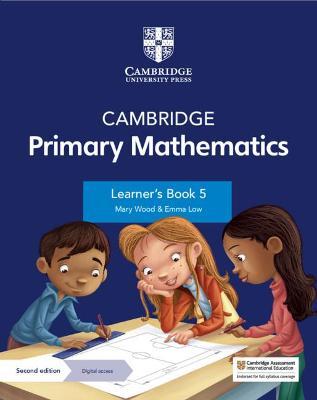
Discover our new resources for the Cambridge International Primary and Lower Secondary Curriculum Frameworks. Whether they are rounding decimal numbers or calculating time intervals on a train timetable, Cambridge Primary Mathematics helps your learners develop their mathematical thinking skills. They’ll be fully supported with worked examples and plenty of practice exercises, while projects throughout the book provide opportunities for deeper investigation of mathematical concepts – including predicting patterns using matchsticks. With key word boxes, clear diagrams and supporting illustrations, the course makes maths accessible for second language learners.
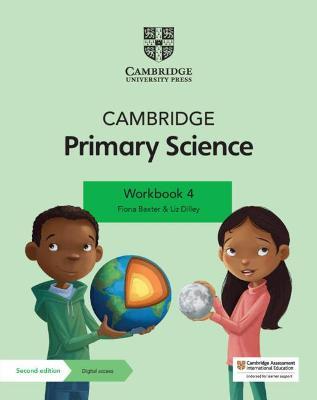
Discover our new resources for the Cambridge International Primary and Lower Secondary Curriculum Frameworks These workbooks are full of activities that help your learners practice what they have learnt and encourage them to think and work scientifically. Focus, Practice and Challenge exercises provide clear progression through each topic, helping learners see what they’ve achieved. The Drawing and writing activities give learners more experience with scientific vocabulary, which helps them to develop their language skills. These different types of exercises and activities make the book ideal for use in the classroom or for homework.
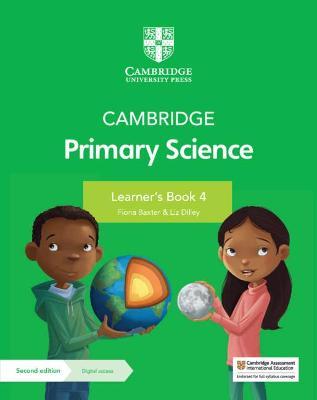
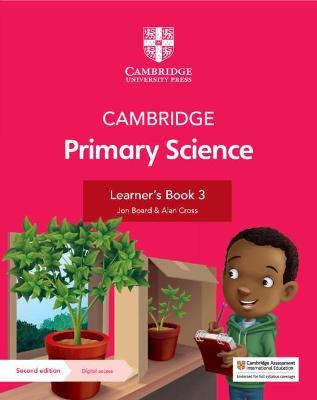
Discover our new resources for the Cambridge International Primary and Lower Secondary Curriculum Frameworks From finding out if water conducts electricity, to discovering how energy is transferred, Cambridge Primary Science gets your learners thinking like scientists! Packed with opportunities to plan experiments, make predictions and gather results, the series helps your learners think and work scientifically. Each unit ends with a project, like creating a presentation on worm farms, that helps learners bring together what they have learnt and understand how the topics relate to the real world. With vocabulary boxes, clear diagrams and supporting illustrations, the course makes science accessible for learners with English as a second language.
By (author) Sally Burt , By (author) Debbie Ridgard
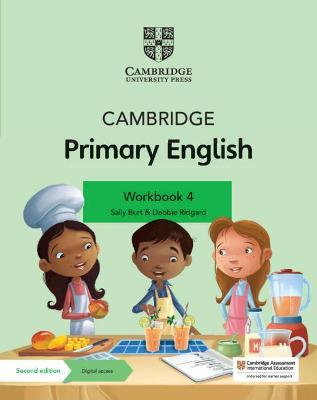
Discover our new resources for the Cambridge International Primary and Lower Secondary Curriculum Frameworks With varied activities – including mind maps, matching and crosswords – these workbooks help your learners practice what they have learnt. Focus, Practice and Challenge exercises provide clear progression through each topic, helping learners see what they’ve achieved. Ideal for use in the classroom or for homework. Links to ‘Language focus’ boxes in the learner’s book provide more grammar practice.
By (author) Sally Burt , By (author) Debbie Ridgard
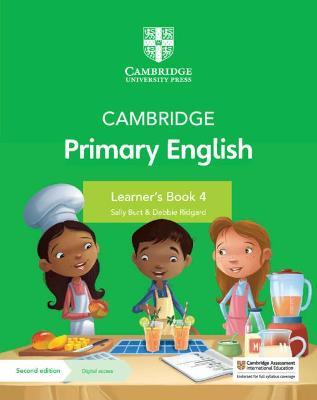
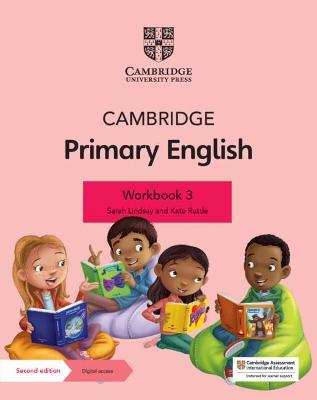
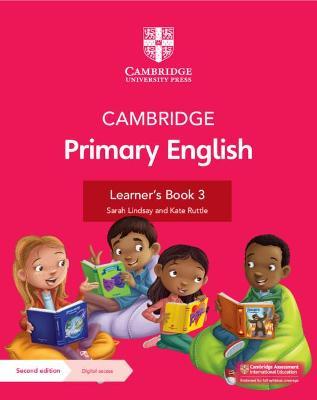
Discover our new resources for the Cambridge International Primary and Lower Secondary Curriculum Frameworks Your learners will develop their English skills as they explore non-fiction texts, discover nonsense poetry and write their own fables. You’ll find a wide range of international fiction, non-fiction, poetry and drama to help your learners develop their understanding of different genres and text types. Each unit includes activities that cover reading, writing, speaking and listening, as well as opportunities to develop 21st century skills – such as collaboration and critical thinking. Units end with a project, like creating an exhibition about World Environment Day, to help students communicate confidently and understand how to apply their learning to real-world scenarios.
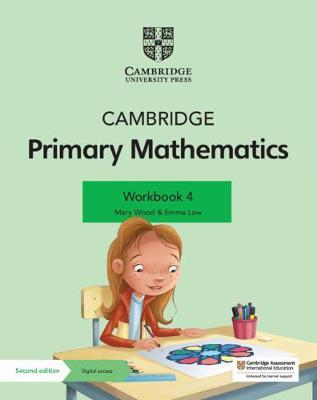
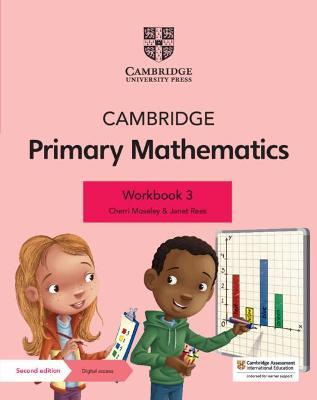
Discover our new resources for the Cambridge International Primary and Lower Secondary Curriculum Frameworks. Packed with activities, including puzzles, ordering and matching, these workbooks help your students practice what they have learnt. Specific exercises develop thinking and working mathematically techniques. Focus, Practice and Challenge exercises provide clear progression through each topic, helping learners see what they’ve achieved. Ideal for use in the classroom or for homework.
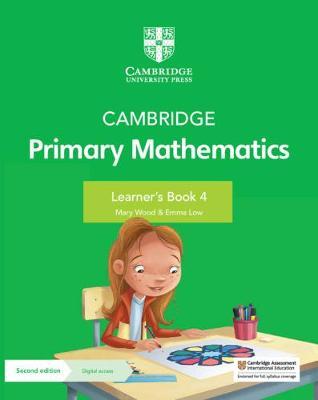
Discover our new resources for the Cambridge International Primary and Lower Secondary Curriculum Frameworks. Whether they are learning about multiplying with chocolate or using recipes to understand fractions, Cambridge Primary Mathematics helps your learners develop their mathematical thinking skills. Learners will be fully supported with worked examples and plenty of practice exercises, while projects throughout the book provide opportunities for deeper investigation of mathematical ideas and concepts, such as exploring negative numbers through water levels. With key word boxes, clear diagrams and supporting illustrations, the course makes maths accessible for second language learners.
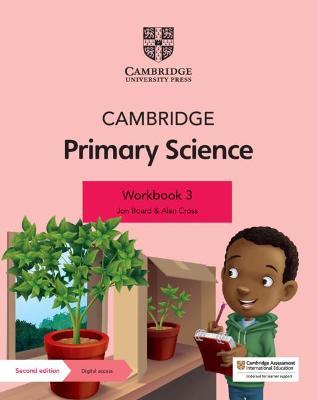
Discover our new resources for the Cambridge International Primary and Lower Secondary Curriculum Frameworks These workbooks are filled with exercises that help your students practice what they have learnt and encourage them to think and work scientifically. Focus, Practice and Challenge exercises provide clear progression through each topic, helping learners see what they’ve achieved. The drawing and writing activities give learners more experience with scientific vocabulary, which helps them to develop their language skills. These different types of exercises and activities make the book ideal for use in the classroom or as homework.
Discover our new resources for the Cambridge International Primary and Lower Secondary Curriculum Frameworks From learning about why the Moon appears to change shape, to investigating how shadows are formed, Cambridge Primary Science gets your learners thinking like scientists! Packed with opportunities to plan experiments, make predictions and gather results, the series helps your learners to think and work scientifically. Each unit ends with a project, like designing a reusable or disposable object, that helps students bring together what they have learnt, and understand how the topics relate to the real world. With vocabulary boxes, clear diagrams and supporting illustrations, the course makes science accessible for learners with English as a second language.
By (author) Sarah Lindsay , By (author) Kate Ruttle
Whether they are exploring non-fiction texts, performing poetry or writing their own fables, our new primary and lower secondary resources help your learners develop critical thinking, communication and collaboration skills. With active learning at its heart, differentiation and assessment for learning opportunities, the series helps your students achieve their potential. You’ll find vocabulary and grammar support, along with plenty of opportunities to develop speaking and listening skills throughout. The accompanying Digital Classroom resource includes video, audio and interactive activities to bring your lessons to life. Our accessible teachers’ resources provide everything you need for the course including support and guidance to plan and deliver your lessons with confidence. Developed for the Cambridge International Primary and Lower Secondary curriculum
Product details
Paperback | 206 pages
219 x 276 x 12mm | 530g
31 Dec 2021
Cambridge University Press
Cambridge, United Kingdom
English
Revised
2nd Revised edition
Worked examples or Exercises; Worked examples or Exercises
By (author) Sarah Lindsay , By (author) Kate Ruttle
Discover our new resources for the Cambridge International Primary and Lower Secondary Curriculum Frameworks Your learners will develop their English skills as they explore different settings for stories and discuss the difference between myths and legends. You’ll find a range of international fiction, non-fiction, poetry and drama throughout the book to help learners develop their understanding of different genres and text types. Each unit is packed with activities that cover reading, writing, speaking and listening, as well as opportunities to develop 21st century skills – such as collaboration and critical thinking. Units end with a project, like planning props for a play, to help students communicate confidently and apply their learning to real-world scenarios.
By (author) Cherri Moseley , By (author) Janet Rees
Discover our new resources for the Cambridge International Primary and Lower Secondary Curriculum Frameworks. Packed with activities, including identifying lines of symmetry in patterns and completing frequency tables, these workbooks help your students practice what they have learnt. Specific exercises develop thinking and working mathematically techniques. Focus, Practice and Challenge exercises provide clear progression through each topic, helping learners see what they’ve achieved. Ideal for use in the classroom or for homework.
WordPress database error: [Table './smDJtGH6wTJK5t/wp1f_actionscheduler_actions' is marked as crashed and last (automatic?) repair failed] SELECT a.action_id FROM wp1f_actionscheduler_actions a WHERE 1=1 AND a.hook='wc_schedule_pending_batch_processes' AND a.status IN ('in-progress', 'pending') LIMIT 0, 1